Reimagining public health practice and research for UHC in Pakistan
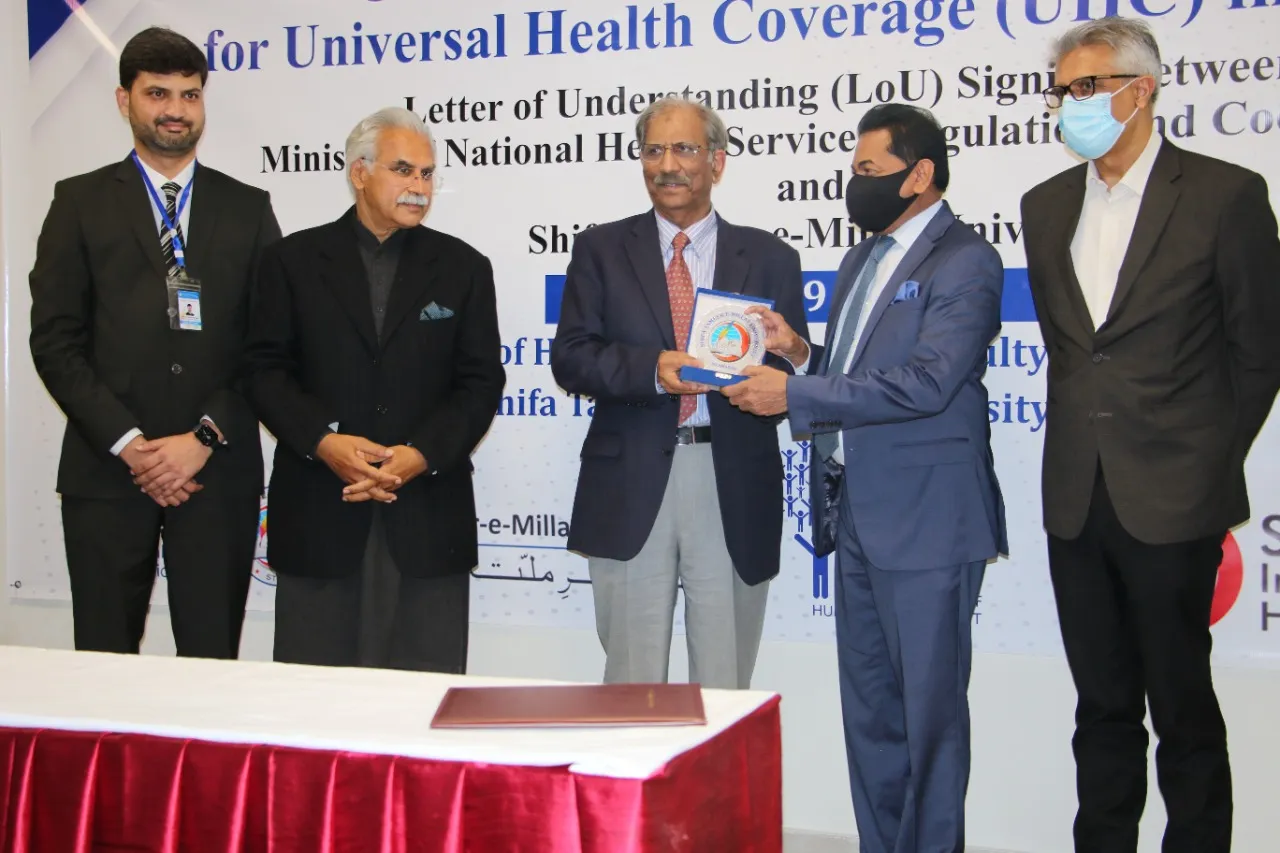
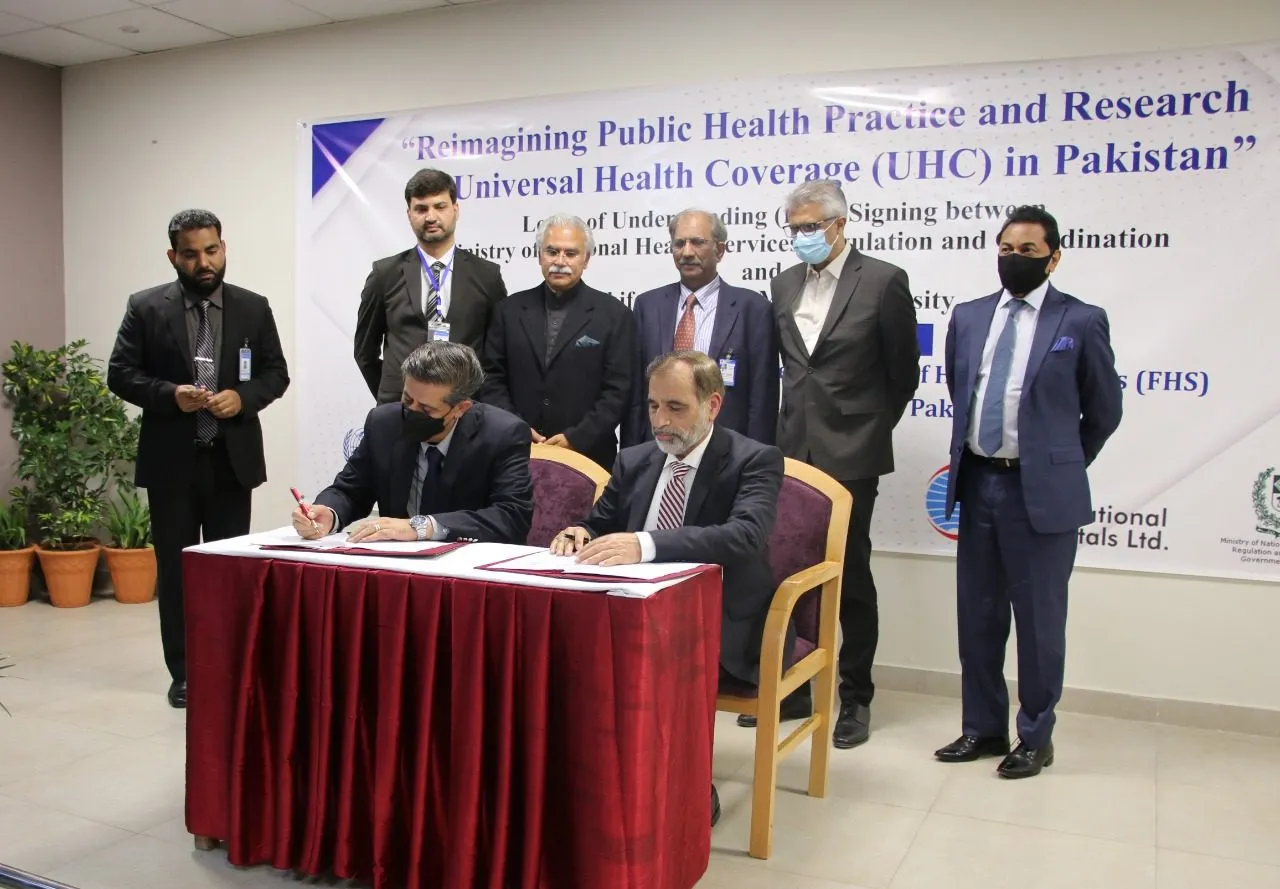
"To achieve the objective of timely and meaningful progress towards Universal Health Coverage (UHC), the role of the private sector as an equal partner with the public sector is inevitable and cannot be overemphasised." This was stated by the Health Minister, Dr. Faisal Sultan, while speaking at an MoU signing ceremony between the Health Ministry (MoNHSR&C) and Shifa Tameer-e-Millat University (STMU).
The MoU stipulates joint efforts by the signatories to further the agenda of UHC in the country. Pakistan, as a UN member state, has agreed to achieve UHC for its population by 2030 as provided for in the Sustainable Development Goals. The UHC concept requires people's access to health services, when and where needed, without facing financial hardship.
The core objective of the three-year and further extendable MoU provides for aligning medical and public health education, training, practice and research with UHC.
STMU, a federally chartered university involved in research and teaching activities in health and allied sciences, is composed of various colleges, constituent institutes and a teaching hospital. The Global Institute of Human Development (GIHD) is a constituent institute of STMU involved in top academic research, and has also founded the nation's first School of Universal Health Coverage (SUHC).
What the speakers said
Former Health Minister and Professor of Health Systems and Population Health at GIHD-STMU, Dr. Zafar Mirza, apprised the audience of the vision, mission and strategy of the SUHC. He elaborated the proposed role of the SUHC in capacity building of health managers, journalists, development workers and academia through a series of certificate, diploma and graduate courses to be offered at SUHC-GIHD. Founding Director of GIHD, Dr. Syed Usman Hamdani, shared his thoughts on the concept of the institute, its vision, mission, research undertakings and their practical policy impact.
WHO's focal person on mental health for the region, Dr. Khalid Saeed, explained the efforts and plans being undertaken by the UN body for promoting mental health in the UHC context in Pakistan. Dr. Khalid emphasised that to ensure availability of mental health services, wide-spectrum alliances among the public sector, private sector, development sector and academic entities were the need of the hour. He lauded the MoU among the Health Ministry, WHO and STMU in this context.
Richard Hawkes, CEO of the British Asian Trust, said BAT was delighted to know that GIHD, the Health Ministry and WHO had decided to integrate mental health into primary healthcare, adding that he looked forward to seeing this partnership make progress. BAT has been working on mental health in Pakistan since 2012.
Dr. Muhammad Aamir, Dean of the Faculty of Health Sciences, also endorsed that UHC cannot be realised without an active partnership between the public and private sectors. He explained how STMU is going to play its part by integrating the UHC concept in curricula and training modules to prepare young physicians capable of imparting UHC to the communities they opt to serve.
WHO's Country Director for Pakistan, Dr. Palitha Gunarathna Mahipala, Chancellor STMU, Dr. Manzoor H. Qazi, and Vice Chancellor STMU, Prof. Dr. Muhammad Iqbal Khan, also expressed their commitment to the agenda of UHC in Pakistan and shared their excitement about being part of this endeavour. Dr. Manzoor H. Qazi appreciated the GIHD and SUHC teams for shouldering this important national health agenda, and assured the complete support of STMU and the Shifa family to make it a success and an example for other provinces to follow and benefit from.