

Loading
DHA Campus, IslamabadMandra Campus, Rawalpindi
Risk prediction and prevention
Can we identify which adolescents are most at risk of depression — and use that knowledge to prevent it before it takes hold? IDEA-IMPACT connects risk prediction to preventive action.
The challenge
Adolescent depression can have lasting consequences, yet current approaches often struggle to identify young people at risk before symptoms emerge.
The IDEA-IMPACT project addresses a critical gap: knowing who is at risk is only useful if it leads to meaningful opportunities for prevention.
The research
IDEA-IMPACT builds on the IDEA-RS, a risk prediction model using 11 readily available sociodemographic and psychosocial factors to estimate an adolescent's probability of developing depression within three years.
The project will strengthen the model across different populations, explore additional risk factors and outcomes, identify factors that protect young people from depression, and connect risk prediction to preventive action.
From prediction to prevention
The project moves through four connected questions.
Improve the accuracy and relevance of IDEA-RS across different settings.
Explore social, interpersonal, biological and other factors linked to mental health.
Identify modifiable factors such as social connection, relationships and positive self-perception.
Use evidence from existing interventions and co-design a new, low-intensity preventive approach for adolescents at higher risk.
Putting young people at the centre
Young people with lived experience are not simply research participants — they are advisors, peer researchers and co-designers.
Advisory groups in Brazil and Pakistan will help shape the research, interpret findings and co-design the preventive intervention.
Research in Pakistan
GIHD contributes to the work on protective factors and the bridge between prediction and prevention.
In Pakistan, the project builds on longitudinal research and an existing EASE study where IDEA-RS is being measured alongside an intervention for young adolescents. This creates an opportunity to examine whether risk profiles can help inform preventive approaches.
What could this research change?
Timing
Identify vulnerability before depression becomes established.
Targeting
Move from one-size-fits-all approaches towards prevention informed by risk and protective factors.
Scale
Generate evidence for culturally relevant, low-intensity prevention that could eventually be delivered through health and education systems.
Project partners and collaborators
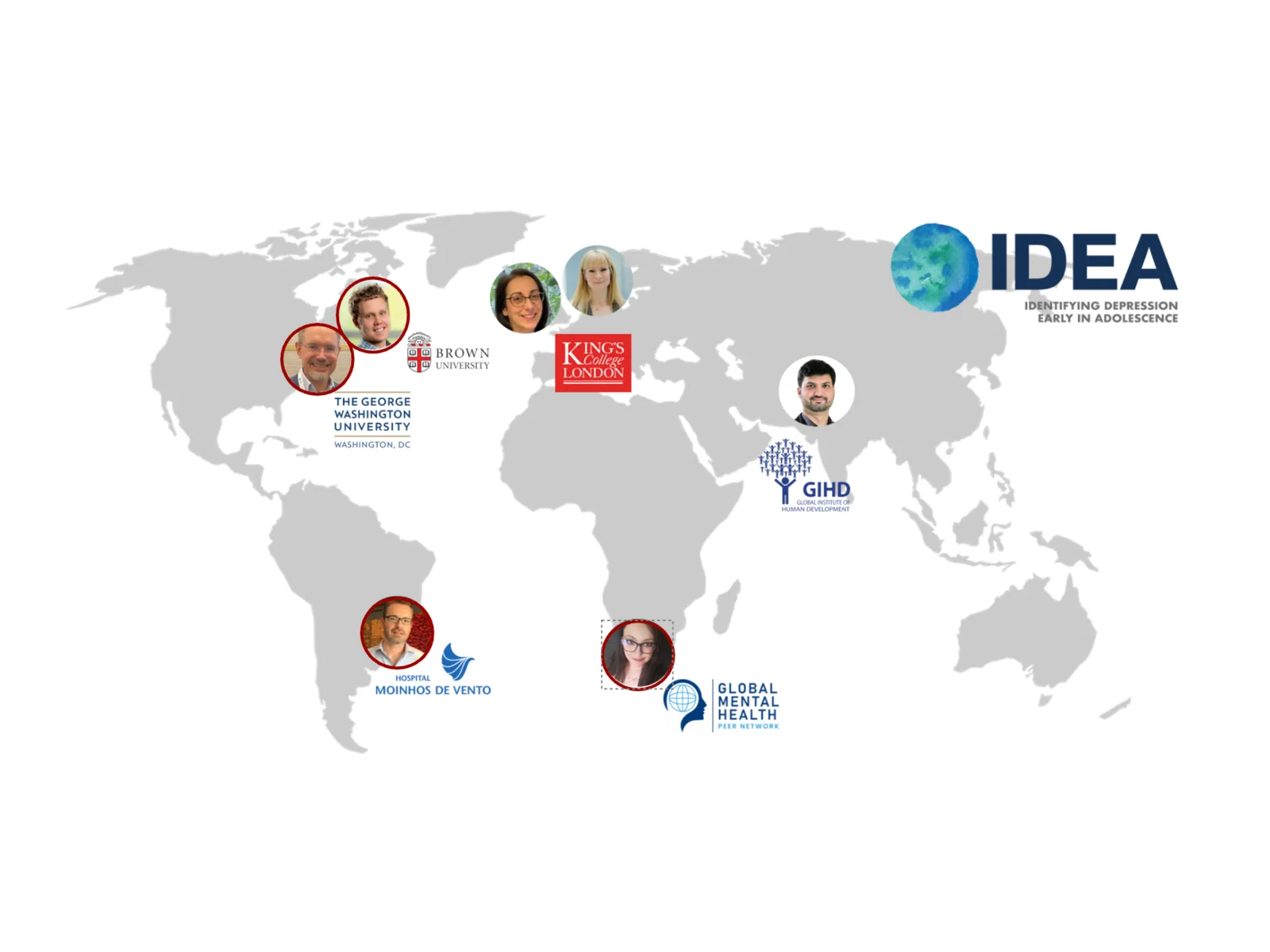
IDEA-IMPACT is delivered across Brazil, the United States, the United Kingdom, South Africa and Pakistan. The research itself runs in Pakistan and Brazil — the two countries with youth advisory groups and data collection — while the remaining partners contribute analytic, methodological and lived-experience expertise.
 George Washington University, USA
Connected work
A longitudinal study generating high-quality evidence on how individual and combined stressors contribute to the onset of depressive symptoms in young people, in Pakistan, Indonesia and Colombia.
Pakistan, Indonesia, Colombia

Can technology make it possible to train and supervise more non-specialist school counsellors, without compromising the quality of care they provide? A randomised test of technology-assisted cascade training and supervision for EASE.
Pakistan

PREVENT is a school- and community-based programme designed to strengthen adolescent mental wellbeing by placing family support at the heart of prevention.
Pakistan
Collaborate with GIHD
GIHD partners with international research institutions, government and UN agencies. Get in touch to discuss collaboration, data or publications.
Monday to Friday, 9 am to 5 pm