Loading
DHA Campus, IslamabadMandra Campus, Rawalpindi
The full training catalogue
Six-month professional certificate training programmes built on GIHD's own published research, using an apprenticeship approach: direct training by our faculty, followed by supervised implementation.
How these programmes work
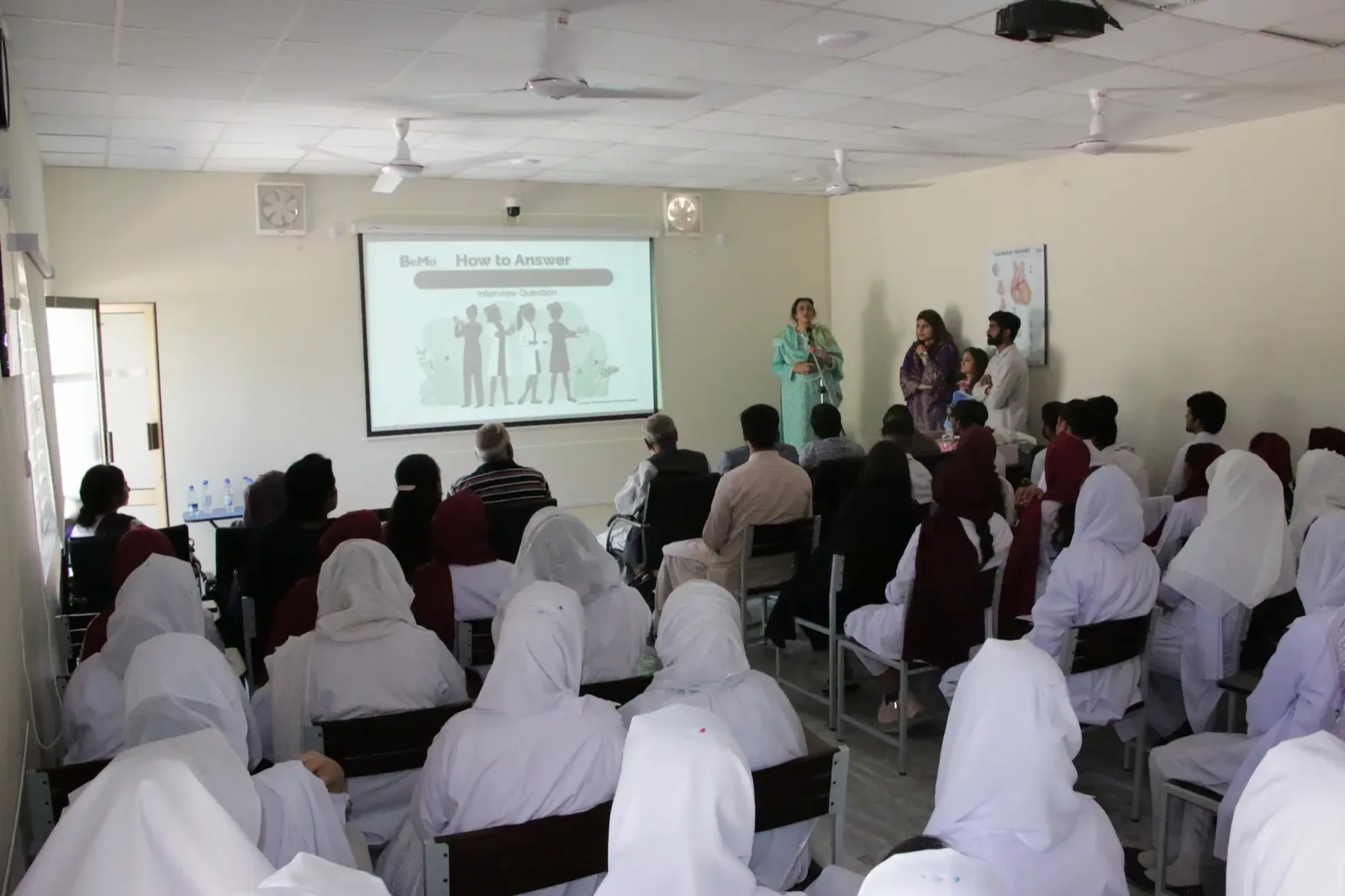
GIHD offers 6-month long professional certificate training programmes. Our training programmes are informed by the latest research that recommends early interventions across the life course to optimize human development and promote well-being.
All courses use an apprenticeship approach to build capacity for providing and supervising public health interventions in low resource settings. This refers to direct didactic training by our faculty followed by supervised implementation by the participants. In some cases, this training and supervision is done from a distance — meeting weekly with supervisors by phone or Skype — or on the ground with local therapy supervisors, depending on the previous experience and training of the participants.
Informed by the original research conducted by our faculty and published in high impact international journals, these high quality research-led training courses are listed below.
Subject to academic council and regulatory approvals, credit hours earned through eligible certificate training courses will be transferable to the planned Master of Public Health and Research (MPH&R) degree programme at GIHD upon its formal launch.
For doctors and health system leaders
This is a one-year blended learning programme designed with the aim of capacity building of primary care physicians through flexible training to provide comprehensive, evidence-based, ethical and holistic care to patients. The structure of this diploma follows the basic framework of the Regional Diploma in Family Medicine by the WHO Eastern Mediterranean Region Office (EMRO) and is contextualized to the ground realities of Pakistan.
The diploma provides understanding of the common clinical problems seen in primary care including differential diagnosis, investigations and management. It also provides rich audiovisual educational resources in the form of recorded lectures, videos of procedures, videos of physical examinations, videos of real patients, videos of consultation skills, videos of diagnostic tests, reading material and clinical guidelines. The educational material including reading material and videos are followed by formative assessments which are self-paced and asynchronous, giving the required flexibility to adjust to working schedules of doctors.
This diploma has an online component (recorded videos and interactive live online sessions) as well as a hands-on practical component (on-campus practical workshops and clinical attachments). The clinical attachments are only for those doctors who have less than five years' experience. Those doctors who have five years' experience are only required to do workshops.
Completion certificate will be issued on the basis of completing course work and passing the written exams.
Embedded within the Diploma in Family Medicine, this 6-month certificate course has been designed for General Physicians and Family Physicians with special interest in mental health. General Physicians enrolled in the Diploma in Family Medicine, with Special Interest in Mental Health (GPwSI), will have the opportunity to enroll in the 6-month certificate programme in mental health.
The content and structure of the certificate course is based on the Universal Health Coverage (UHC) Benefit Package. This course shall provide systematic training to family physicians and general practitioners to develop the knowledge, skills, and attitudes relevant to providing mental health care in primary health care (PHC) settings and to supervise their peers and provide referral support.
Completion certificate will be issued on the basis of completing course work and passing the written exams.
This 6-month certificate course has been designed to improve understanding and enhance analytical capacity of health professionals and stakeholders in the areas of health system strengthening, health system resilience and progress towards Universal Health Coverage (UHC) in the context of Pakistan.
The course aims to provide a big-picture understanding of a health system to participants and will cover how health systems are conceptualized and structured to organize integrated delivery of health services; perform essential public health functions; and ensure health security by strengthening emergency preparedness and response. The course will provide a deeper understanding of Primary Health Care (PHC) and UHC to the participants, how leadership is critical in reforming health systems towards UHC, and what leadership attributes need to be developed to play productively in making health systems advance towards UHC.
By the end of the course the participants will be able to: understand the concept of primary health care based UHC (essential health services and financial protection coverage) and its components with specific reference to the situation in Pakistan; define a health system, identify the different components of a health system, explain how the different components interact to fulfill health system goals and objectives, and appraise health system frameworks including the WHO health system conceptual framework; elucidate the journey of progression from PHC to HSS and from the latter to UHC and the SDGs; realize the interface between the equity, security and economic development agendas of HSS and their complementarities; identify the elements of the different health system building blocks (governance, financing, workforce, information, service delivery, medicines and technology) and what it takes to improve their function; comprehend what is meant by health system performance assessment and identify measures and indicators that can help assess performance; appreciate the role of the private health sector in advancing the UHC agenda; and appraise the WHO Framework for Action on Advancing UHC in the Eastern Mediterranean Region and identify priority actions for country-level interventions.
The course will be offered using a mix of pedagogical approaches that will include interactive lectures, small group tasks and presentations, panel discussions, problem solving exercises and review of scientific papers.
Register your interest
Monday to Friday, 9 am to 5 pm