
Loading
DHA Campus, IslamabadMandra Campus, Rawalpindi
For practising clinicians
A one-year blended diploma for General Practitioners, aligned with the WHO Framework for Regional Diploma in Family Medicine and offered throughout Pakistan by Shifa Tameer-e-Millat University.
Registration information
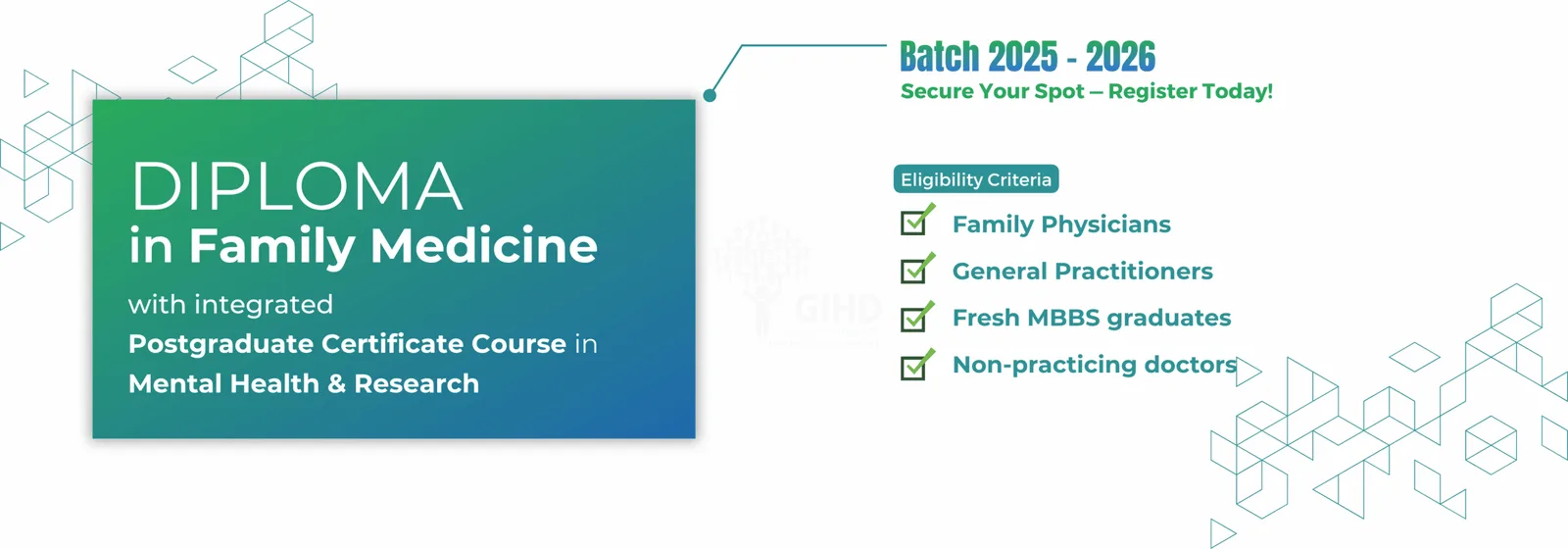
After successfully completing the first and second cohort and training more than 400 General Practitioners all over Pakistan, Shifa Tameer-e-Millat University announces admission for the third cohort of its one-year blended Family Medicine Diploma in Pakistan.
The program aligns with the WHO Framework for Regional Diploma in Family Medicine and equips General Practitioners with evidence-based, ethical care skills for comprehensive patient services.
If you meet the eligibility requirements and aspire to become a family physician, please submit your admission application now.
Applications are submitted online through the registration link, with attested copies of the required documents.
Eligibility criteria
Any MBBS doctor who has completed a one-year house job and has a valid PMC/PMDC certificate — either provisional or full registration — can join this diploma.
The track you follow depends on how long you have been in clinical practice.
Under 5 years' experience
Online lectures and workshops, plus 4–8 weeks of clinical rotations under specialist supervision.
5 years' experience or more
Complete the online lectures and the workshops. Clinical rotations are not required.
DFM components
This diploma involves rich audio-visual educational resources in the form of recorded lectures on clinical procedure and examination, online live interaction sessions with experienced faculty, and hands-on workshops plus clinical attachments.
Participants are required to complete both the written and practical components to earn a certificate. Clinical rotations apply only to doctors with less than 5 years' experience; those with more than 5 years' experience attend workshops only.
Modules description
This module will provide participants with an understanding of the principles and basics of Universal Health Coverage (UHC). By the end of this module, participants will be able to understand the concepts of essential service delivery packages, community engagement, different health interventions and their integration into the Primary Health Care (PHC) Family Practice Approach.
This module introduces participants to the basic principles of family medicine. By the end of this module, participants will be able to demonstrate their understanding of person-centered holistic care and the bio-psycho-social approach of family medicine, and will be able to exhibit effective communication skills.
This module provides an introduction to the diagnosis and management of common infectious diseases. By the end of this module, participants will be able to identify potentially serious infections and provide appropriate referrals.
This module covers the diagnosis and management of common medical problems. By the end of this module, the participants will be able to demonstrate their understanding of cardiovascular problems, neurological problems, endocrine problems, respiratory problems, gastroenterological problems, liver problems, and dermatological conditions.
This module is focused on medical and surgical problems from presentation to diagnosis, including management and the associated issues. By the end of this module, participants will be able to gain knowledge of the pathophysiology of surgical problems such as musculoskeletal problems, ear, nose and throat problems, genitourinary problems, and eye problems.
Building upon participants' skills and knowledge, by the end of this module, the students will be able to develop an understanding of the diagnosis and management of pediatric, obstetrics and gynecological problems.
This module aims to provide participants with education and training in the assessment, treatment, planning and review of mental health issues commonly presented in general practice. By the end of this module, participants will be able to demonstrate their understanding of the diagnosis and management of depression, anxiety, grief, insomnia, psychosis, substance use, dementia and child and adolescent mental health problems in primary care.
This module covers the basic understanding of implementation research, ethical principles of research, challenges and the ethics approval process. By the end of this module, participants will be able to develop a basic understanding of mixed-method research, implementation research designs, selection of suitable research designs, the basics of data collection, tools and questionnaires, data analysis techniques, research software, enhanced research writing skills, and knowledge of scientific publications.
What the diploma leads to
Participants who successfully complete both the diploma and the integrated postgraduate course receive two certificates from Shifa Tameer-e-Millat University (STMU): one for the Diploma in Family Medicine, and one for the Postgraduate Certificate Course in Mental Health and Research for UHC. Both certificates are supported by the World Health Organization and the Ministry of National Health Services, Regulations, and Coordination, Pakistan.
Documents required
Aspiring candidates who wish to apply for admission should submit their applications online using the provided registration link, attaching attested copies of the following documents.
GIHD provides fee details on request. Email [email protected] or [email protected], or call +92 333 0590373 or +92 333 5406660.
Where training happens
Training for DFM is organised throughout Pakistan. Family medicine attachments and hospital rotations are arranged within your district of residence. Only candidates from Islamabad train at the Global Institute of Human Development, Shifa Tameer-e-Millat University (GIHD-STMU).
General FAQs
Any MBBS doctor who has completed a one-year house job and holds a valid PMC/PMDC certificate — provisional or full — can apply. The diploma is aimed at family physicians, general practitioners, recent MBBS graduates and doctors who are not currently in practice. Register through the STMU application link on this page. For queries, email [email protected] or call +92 333 0590373.
This is a one-year blended diploma offered throughout Pakistan by Shifa Tameer-e-Millat University. Teaching sits on an LMS: recorded lectures, reading and clinical guidelines, plus workshops and attachments. Admissions are open for the third cohort. Islamabad participants train at GIHD–STMU; other districts use local family-medicine attachments.
There are two tracks. Doctors with less than five years of clinical experience follow the full-time track, including 4–8 weeks of clinical rotations. Doctors with five years or more follow a part-time track: online lectures and workshops, without those rotations. Both tracks are blended around working clinic hours rather than a residential year in Islamabad.
The online component is self-paced so you can fit it around clinic work. You also join live sessions with specialists, complete assessments, and — on the full-time track — clinical rotations and a research practicum. Exact weekly hours are not published as a single figure; ask the programme team if you need a timetable before you register.
DFM is supported by WHO and Pakistan's Ministry of National Health Services, Regulations and Coordination, and is aligned with the WHO EMRO regional diploma framework. GIHD publishes that a further year of training can be eligible for MRCGP [INT], and that doctors with more than five years' experience can use the course to prepare for MCPS Family Medicine. Ask the programme team to confirm how that pathway applies to you.
Assessment has a written paper (100 multiple-choice questions in three hours) and a practical component: OSCE, workplace-based assessment, a research practicum and, for doctors with under five years' experience, clinical rotations. You need both components to earn the certificate. Doctors with more than five years' experience attend workshops rather than those rotations.
Yes. DFM participants complete mental health, practical skills and implementation-research modules, plus a research practicum, alongside family medicine. Completing both yields two STMU certificates: the diploma and the postgraduate certificate in mental health and research for UHC. Detail sits on the PG Certificate page.
Participants who complete the diploma and the integrated postgraduate course receive two certificates from Shifa Tameer-e-Millat University: one for the Diploma in Family Medicine and one for the postgraduate certificate in mental health and research for UHC. GIHD states that both are supported by WHO and the Ministry of National Health Services, Regulations and Coordination.
You cannot take the postgraduate certificate on its own. GIHD currently offers it only as part of the Diploma in Family Medicine. Anyone who wants that certificate must complete DFM as well. Read eligibility and modules on the PG Certificate page, then register for DFM.
The practicum belongs to the embedded postgraduate certificate. Under faculty supervision you apply coursework to a mental health question in your own practice: screening, UHC benefit-package care, referral of severe cases, and monitoring with standardised questionnaires. It is assessed as part of the diploma, not an optional extra.
No, unless you live in Islamabad. Attachments and hospital rotations are arranged in your district of residence. Only Islamabad candidates train at GIHD–STMU. The LMS, live sessions and workshops are designed so practising doctors across Pakistan can take part without relocating.
GIHD does not publish a fee on this page. Ask in writing before you pay anyone: [email protected] or [email protected], or call +92 333 0590373 / +92 330 9979750. Do not rely on third-party admission sites for a price.
Contact us
You might also consider
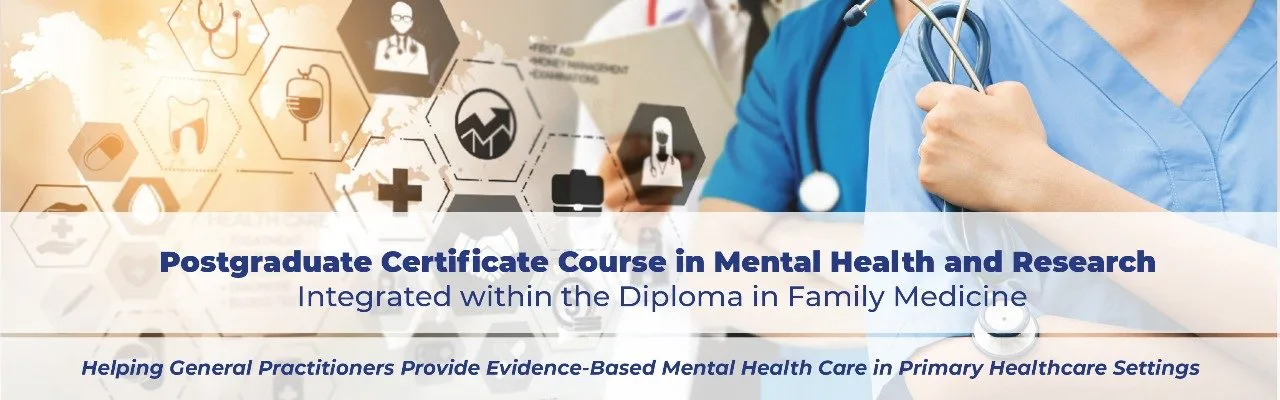 PG Certificate in Mental Health & ResearchDoctors & clinicians · 6-month taught curriculum, followed by a 6-month supervised research practicum
 School of Universal Health CoverageHealth professionals
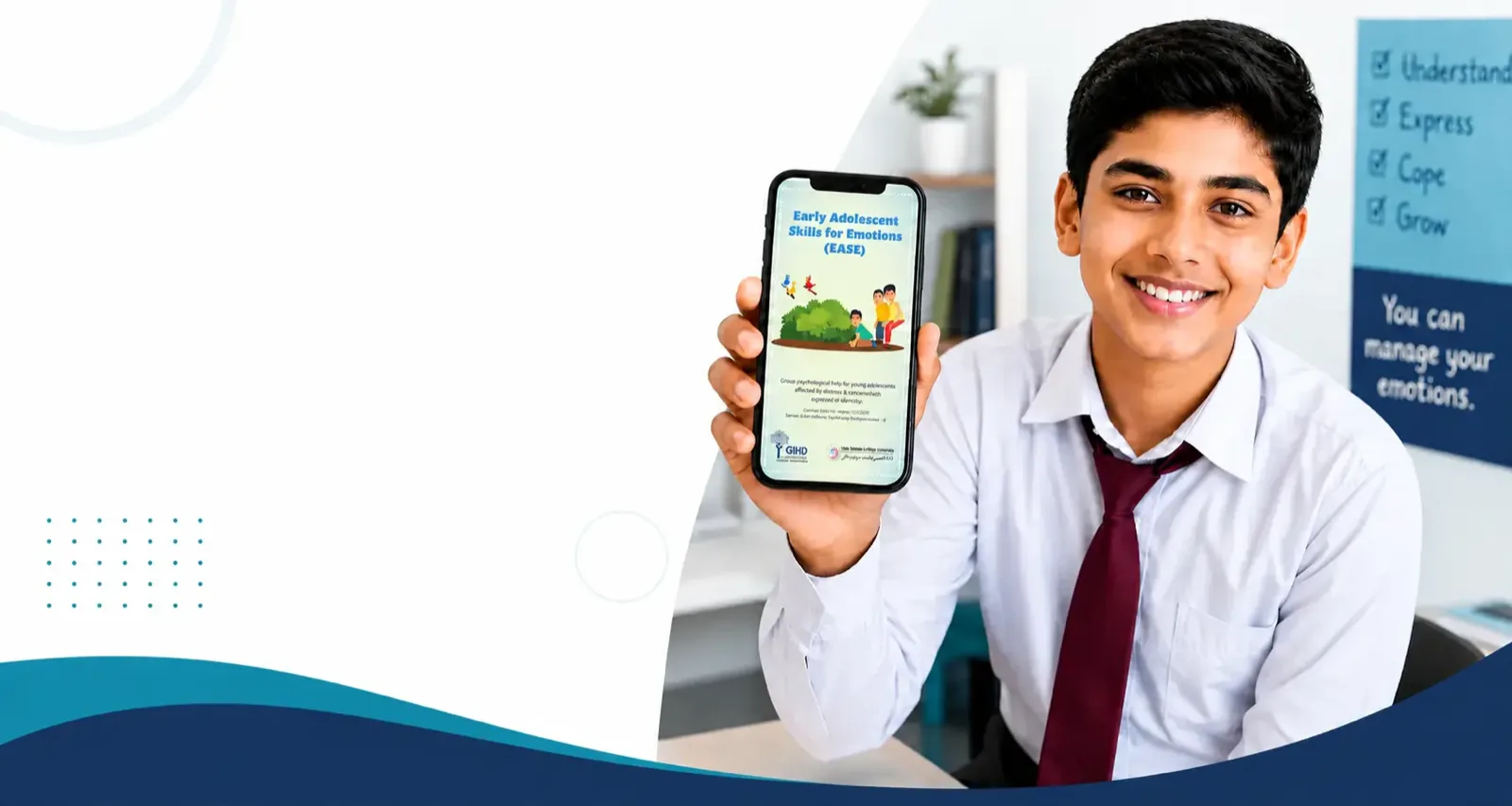 EASE Training & CertificationTeachers & school counsellors · 9 modules, around 4 hours in total
 All certificate programmesHealth professionals · 6 months per programme
Admissions open
Submit your application online using the registration link, attaching attested copies of the required documents.
Monday to Friday, 9 am to 5 pm