Loading
DHA Campus, IslamabadMandra Campus, Rawalpindi
From evidence to a scalable system
Taking EASE, a WHO–UNICEF endorsed group psychological intervention, into routine child and adolescent mental health services across all four provinces of Pakistan — and studying what it takes to sustain it there.
The challenge
Adolescents across Pakistan face substantial mental health needs, yet structured, evidence-based psychological interventions are not routinely available within public mental health services. Workforce shortages, limited specialist capacity and uneven access make it difficult to provide early support at scale.
RISE addresses a critical next step: how to move an intervention with established efficacy into routine services, while maintaining quality, reach and sustainability.
The research
RISE will take Early Adolescent Skills for Emotions (EASE), a WHO–UNICEF endorsed, culturally adapted group psychological intervention, and study how it can be integrated into tertiary child and adolescent mental health services across Pakistan's four provinces.
Rather than creating a parallel specialist workforce, EASE will be delivered by supervised postgraduate psychiatry and psychology residents, embedding evidence-based psychological intervention within existing clinical training and supervision pathways.
From efficacy to real-world impact
A cluster randomised controlled trial in Pakistan found reductions in adolescent depression and anxiety, improved functioning and increased positive parental involvement. A parallel trial in Jordan provided evidence of effectiveness in another setting.
Effectiveness
Evaluate clinical effectiveness when EASE is delivered through existing CAMH facilities.
Implementation
Study reach, adoption, feasibility, acceptability, fidelity and sustainability.
Economics
Evaluate costs, cost-effectiveness and potential budget impact for health-system scale-up.
Testing a national scale-up model
The planned evaluation will involve four tertiary child and adolescent mental health facilities, representing Pakistan's four provinces.
A two-arm Hybrid Type-I randomised controlled trial will compare EASE plus Enhanced Treatment as Usual with Enhanced Treatment as Usual alone, among adolescents aged 10 to 15 experiencing depression and anxiety symptoms. Each trial will include 470 adolescent–caregiver dyads, with outcomes assessed at baseline, 3, 6 and 12 months.
Implementation will be assessed using RE-AIM and Proctor's implementation outcomes framework, allowing RISE to examine not only effectiveness, but what is required to sustain high-quality delivery within real health systems.
Planned trial parameters, as set out in the RISE protocol.
Building the infrastructure for scale
National
A proposed hub bringing together training, supervision, fidelity monitoring, certification and policy integration to support scale-up of evidence-based psychological interventions.
Regional
A Collaborative Learning Group and Regional Youth Mental Health Fellowship across the eight CAMHSAN countries, supporting South–South learning and shared implementation capacity.
Global
Developed with The Global Health Network, to support implementation, training and scale-up of evidence-based CAMH interventions.
Young people are co-leads
Young people with lived experience are not positioned simply as research participants.
RISE will establish Youth Advisory Groups at provincial, national and regional levels, with young people contributing to trial procedures, equity mechanisms, implementation strategies, communication and service design.
A lived-experience co-leadership structure will guide engagement, governance, ethics and communication throughout the programme.
What could this research change?
Workforce
Embed evidence-based psychological interventions within postgraduate psychiatry and psychology training, creating a sustainable pathway for expanding the mental health workforce.
Services
Generate evidence on how EASE can be delivered with quality and fidelity through existing public-sector CAMH services across Pakistan.
Scale
Develop the evidence, infrastructure and implementation pathways needed to inform wider integration of early psychological interventions within Pakistan's health system and UHC priorities.
Region
Connect Pakistan's implementation experience with partners across eight South Asian countries, creating a platform for shared learning, workforce development and future scale-up.
Connected work
A longitudinal study generating high-quality evidence on how individual and combined stressors contribute to the onset of depressive symptoms in young people, in Pakistan, Indonesia and Colombia.
Pakistan, Indonesia, Colombia
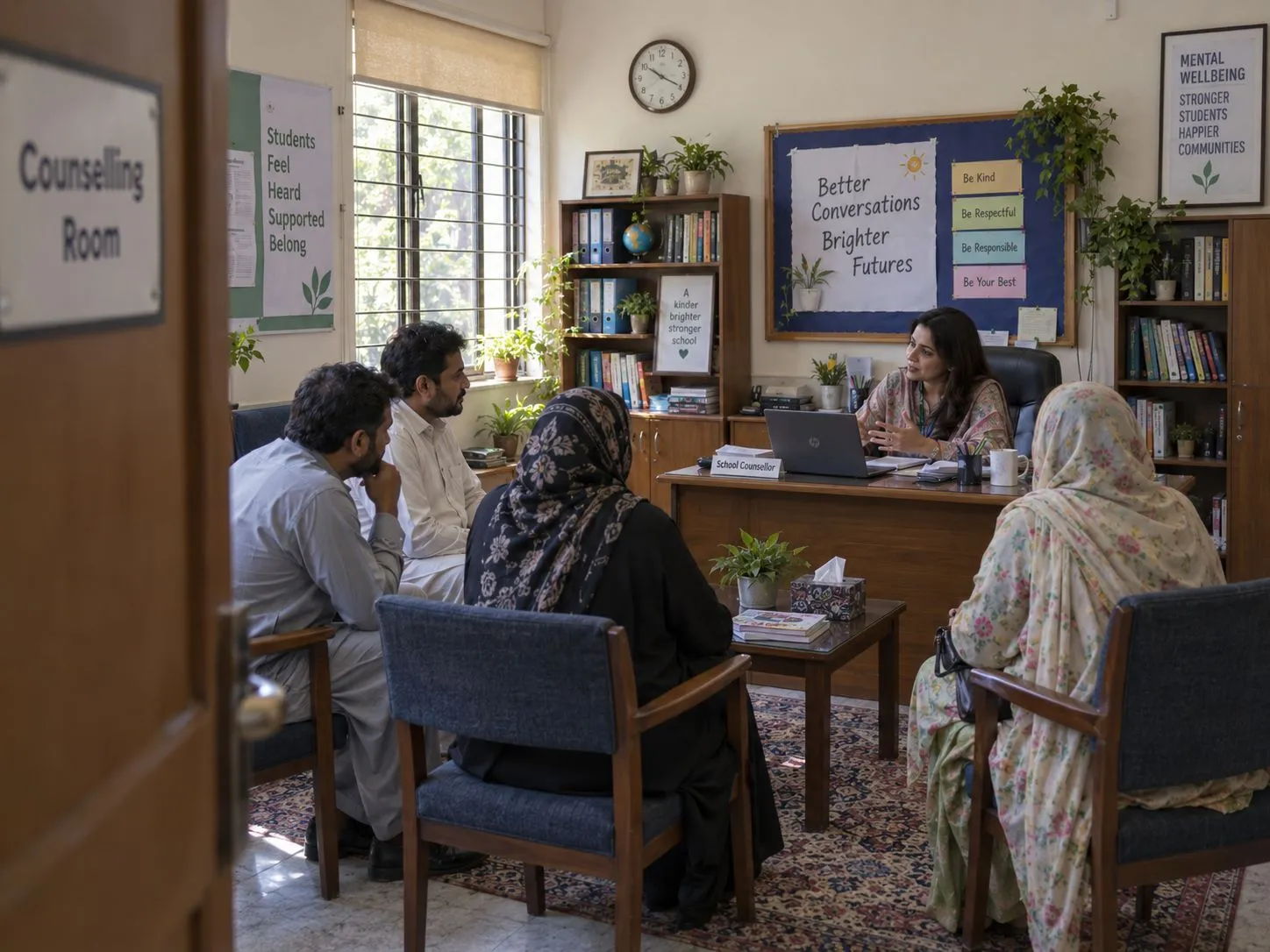
Can technology make it possible to train and supervise more non-specialist school counsellors, without compromising the quality of care they provide? A randomised test of technology-assisted cascade training and supervision for EASE.
Pakistan
PREVENT is a school- and community-based programme designed to strengthen adolescent mental wellbeing by placing family support at the heart of prevention.
Pakistan
Collaborate with GIHD
GIHD partners with international research institutions, government and UN agencies. Get in touch to discuss collaboration, data or publications.
Monday to Friday, 9 am to 5 pm